Fear as Both Our Protector and Our Brake — in Professional and Personal Life
Updated: Sep 11
Back when we, as humans, were primarily concerned with physical survival, fear certainly came in handy. It helped us stay safe and avoid predators who saw us as dinner. But times have changed, while our fear has stayed with us.
And not only that. Over the course of history, we have managed to turn the fear of simply staying alive into absurd fears that often have nothing to do with any real threat. What will my colleagues think? What if I fail? What if I don’t have time for my evening TV show? What if nobody likes me? Will I still be enough?
Psychology shows that many of our greatest fears often never actually happen. And so we don’t just live in fear — we live in an illusion of a world where our fears have already become reality. And this is where the absurdity begins: instead of visualizing a beautiful life and an easier future, our minds create a world full of worries and keep us on constant alert. Our thoughts really do shape the way we experience reality, so it should come as no surprise when unpleasant things start to seep into our actual lives. And instead of stopping the process, we simply reassure ourselves that we were right all along and that life is just like this — bitter, difficult, and often deeply painful.
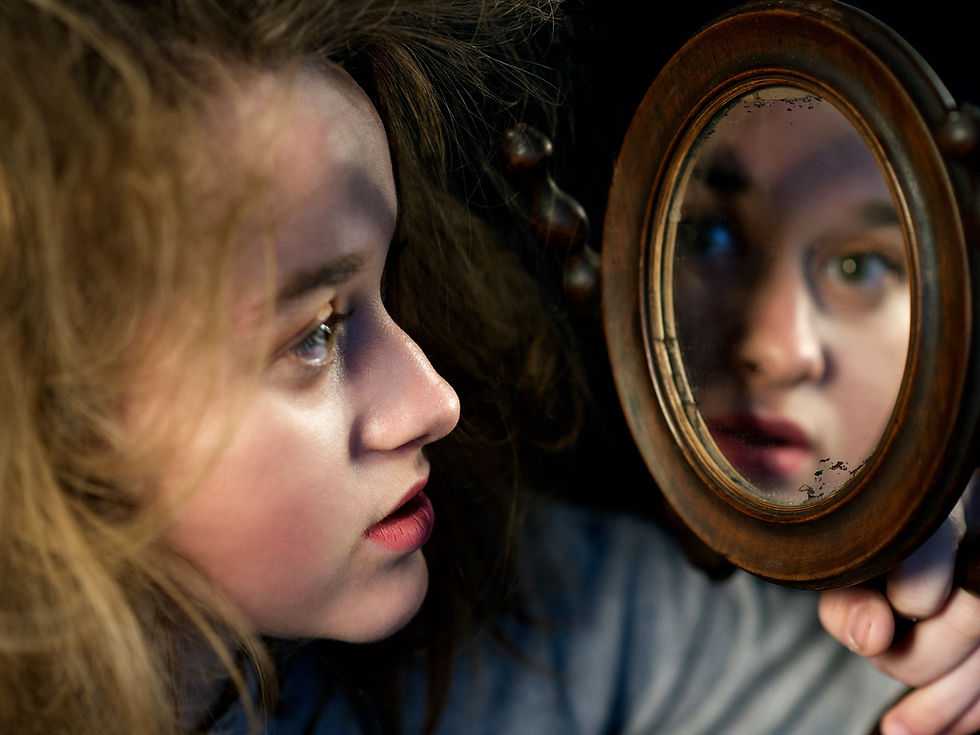
If you’ve seen Disney’s Tomorrowland, this paradox is portrayed rather precisely there. What we believe is very likely to start becoming our reality. And no, not because it is inevitable, but because we unconsciously begin directing our attention toward problems and unpleasant things. Of course, those will still be there, too. But the energy of our lives can change dramatically when we shape our future in our minds not around our fears, but around the joys that are still all around us.
But what if our fears still refuse to leave us alone? I know one proven way to deal with fear. It isn’t easy, but it works — you have to experience it. It sounds frightening, but luckily we live in a world where our thoughts can trigger very real emotional and physical responses. So in this case, it can be enough to experience the fear first in our own minds, through visualization.
For a long time, I thought fear was simply fear and there was nothing I could do about it. But then I started examining myself. It began with the fact that I didn’t like the feeling that something was controlling and influencing me, so I decided to explore my emotions more deeply. And I started asking myself: Why am I afraid? What am I afraid of? What am I really afraid of? And once I started paying closer attention, the answers began to come. It didn’t happen immediately. It took years. And whenever I couldn’t work through a particular fear right away, I came back to it later. Every time I returned to it, I understood my emotions and reactions a little more.
As my fears gradually began to disappear, the empty space they left behind was filled with self-confidence and faith in myself. Instead of being afraid of the future or of a particular situation, I started trusting life, myself, and the Universe. And then, more and more often, moments began appearing in my life that seemed to confirm I was on the right path. And yet I wasn’t suddenly immersed in some esoteric world, nor was I worshipping any particular God. I had simply started consciously dealing with my emotions.
And why is working through our fears so important? Because our fear influences the reality that directly shapes our future — and our minds then create limits and obstacles that prevent us from growing and pursuing our dreams to the extent we truly wish to.
Wanting a new relationship, changing jobs, moving somewhere new, saying a clear no and refusing to adapt ourselves to others simply because we are afraid of being different, or honestly admitting to ourselves what we actually want from life, even if it sounds completely ridiculous. We often block all of this ourselves. And sometimes I feel that our fears have brought us to a point where we are even afraid to dream.
And I understand that. Because if it doesn’t work out, we disappoint ourselves and prove to everyone around us that they were right. And in the end, we may feel like we have to go back to that fearful world of adults. But what if we don’t?


Comments